
Vape Laws Australia 2026: What You Need to Know


Australia’s vape laws in 2026 define vaping products as therapeutic goods, meaning every legal vape must pass through a regulated pharmacy channel before it reaches your hands. The Therapeutic Goods Administration (TGA) and state health authorities now enforce a framework that restricts nicotine concentration, bans sales to anyone under 18, and removes tobacconists, convenience stores, and vape shops from the legal supply chain entirely. If you buy, sell, or carry vapes in Australia right now, these rules apply to you directly. This guide breaks down exactly how the 2026 regulations work, what the penalties look like, and how to stay on the right side of the law.
What are the vape laws in Australia for 2026?
Australia’s 2026 vaping regulations are built on a single core principle: vapes are therapeutic goods, not consumer products. That classification changes everything about how they are sold, who can sell them, and what happens when someone breaks the rules.
The framework treats nicotine vapes the same way it treats pharmaceutical products. The TGA oversees product compliance, and the Department of Health sets the access rules. Vapes can only be sold through pharmacies; tobacconists, vape shops, and convenience stores are no longer legal supply points anywhere in Australia. This is not a gray area. It is a hard prohibition backed by federal law.
The age restriction is equally firm. Selling any vape, including nicotine-free ones, to anyone under 18 is illegal as of April 17, 2026. That rule covers in-store sales and online transactions. A retailer who sells a zero-nicotine disposable to a 17-year-old faces the same legal exposure as one selling a nicotine product.
The shift to a pharmacy model is designed to support smoking cessation rather than recreational vaping. Regulators frame the entire framework around harm reduction for existing smokers, not as a pathway for new users to start vaping.
How can Australians legally buy vapes under the 2026 rules?
The legal purchase pathway in 2026 follows a specific sequence. Skipping any step puts you outside the law, even if the product itself looks legitimate.
Here is how the process works:
- Go to a participating pharmacy. Not every pharmacy stocks therapeutic vapes. You need to find one that has opted into the supply program. The Department of Health maintains guidance on how to locate participating outlets.
- Speak with the pharmacist. A pharmacist consultation is required before purchase. The pharmacist assesses your situation, confirms you are 18 or older, and determines whether a standard or prescription product is appropriate.
- Buy within the nicotine cap. Pharmacist-mediated access allows nicotine up to 20 mg/mL without a prescription in participating states. This covers most standard cessation products.
- Get a prescription for higher concentrations. If you need nicotine above 20 mg/mL, a doctor’s prescription is required. The same applies to anyone under 18 seeking access for medical reasons, which requires both a prescription and parental involvement.
- Keep your receipt. Proof of purchase from a pharmacy is your documentation that the product was acquired through a legal channel.
Pro Tip: Ask the pharmacist specifically whether the product is listed on the TGA’s therapeutic notification register. A listed product gives you the clearest legal protection as a consumer.
The pharmacy access model balances tight regulatory control with practical access for people genuinely trying to quit smoking. It is not designed to be convenient for recreational users, and that is intentional. The regulatory framework treats compliance status as the primary marker of a legal product, not just nicotine content alone.
What are the penalties for illegal vaping products?
Enforcement in 2026 is active, well-funded, and producing real results. Regulators are not issuing warnings. They are seizing stock, shutting stores, and pursuing criminal charges.
The TGA’s enforcement priorities in 2026 have shifted significantly. TGA enforcement no longer relies solely on nicotine lab testing to determine whether a product is legal. The focus is now on whether a product fits the therapeutic notification framework. A vape that looks compliant but was not notified to the TGA is still an illegal product. This matters because it means enforcement catches products that might have slipped through chemical testing alone.
The scale of enforcement activity is significant:
- Over 30,000 illegal vaping products were seized in a single TGA operation in South West Sydney on April 17, 2026. That one operation shows how aggressively regulators are targeting illicit supply networks.
- Western Australia introduced some of the harshest penalties in the country. WA penalties reach up to $21 million in fines and 15 years imprisonment for dealing in illicit vaping products, effective May 18, 2026.
- WA authorities can close stores for up to 90 days if they are found selling illicit tobacco or vaping products. Six stores were ordered to shut within days of the new laws taking effect.
“Western Australia treats illicit vaping as a serious crime with extreme penalties, raising risks from cross-border purchasing or online sources outside WA law.” — TGA and WA Health enforcement guidance
Buying from non-pharmacy sources, including online stores operating outside the legal framework, exposes you to product seizure even if the vape appears to be a standard consumer product. The risk is not theoretical. Enforcement operations are ongoing and nationwide.
What products are legal and which are prohibited?
Understanding what counts as a legal therapeutic vape versus an illicit product is the most practical knowledge you can have as a user in 2026.
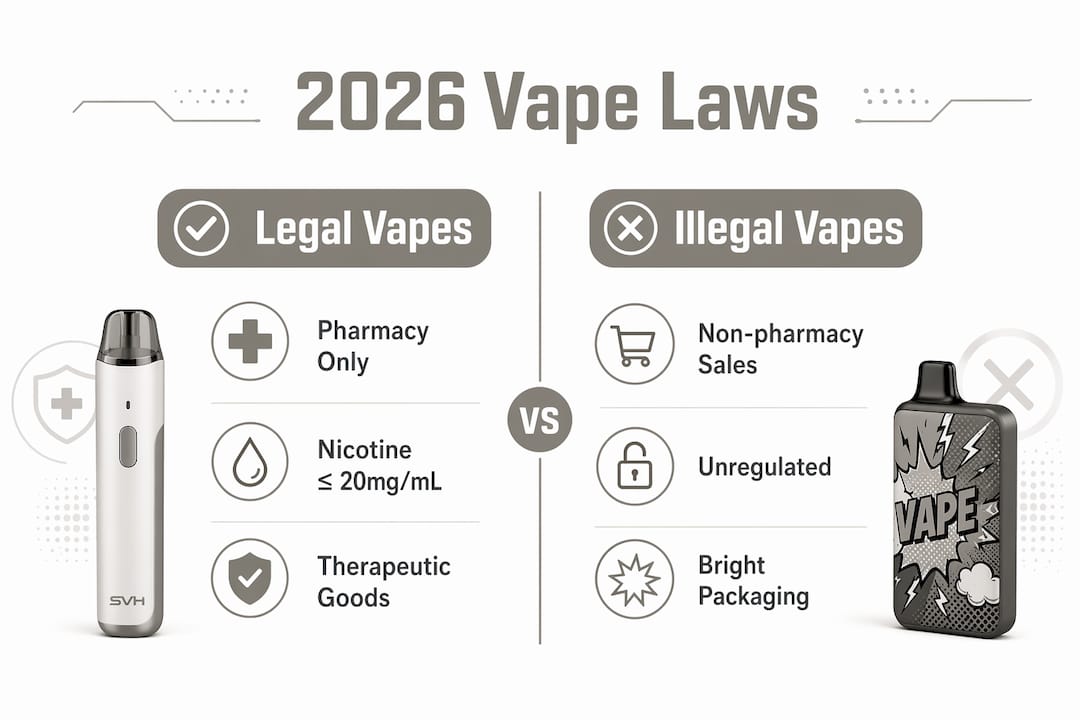
| Feature | Legal therapeutic vape | Illicit vape product |
|---|---|---|
| Nicotine concentration | Up to 20 mg/mL (pharmacy, no prescription) | Unregulated, often exceeds legal limits |
| Sale point | Participating pharmacies only | Vape shops, online gray market, convenience stores |
| TGA notification | Required and verified | Absent or falsified |
| Flavoring | Restricted under therapeutic standards | Often unrestricted, marketed with candy-style branding |
| Advertising | Banned except in limited authorized contexts | Actively marketed on social media and in stores |
| Packaging | Plain, pharmaceutical-style | Bright colors, cartoon graphics, youth-oriented design |
Advertising vaping goods is banned except in strictly limited authorized circumstances under 2026 Therapeutic Goods rules. If you see a vape being promoted on Instagram, TikTok, or in a shop window, that product is almost certainly operating outside the legal framework. That is a reliable red flag.
Pro Tip: If a vape product has bright packaging, cartoon branding, or is being sold anywhere other than a pharmacy, treat it as an illicit product regardless of what the label claims.
The Therapeutic Goods (Vaping Goods – Possession and Supply) Determination 2024 does include limited transition provisions for businesses and individuals. Those exceptions are narrow and time-bound. Relying on them without specific legal advice is a significant risk.
Common compliance mistakes vape users make in 2026
Most people who run into legal trouble with vaping in Australia in 2026 do so because of misunderstandings, not deliberate rule-breaking. These are the mistakes that come up most often.
- Assuming nicotine-free vapes are unregulated. They are not. The age restriction and pharmacy-only supply rules apply to all vapes, regardless of nicotine content. A zero-nicotine disposable sold outside a pharmacy is still an illegal product.
- Buying from online stores without verifying their legal status. Many online vape stores operating in Australia are not authorized pharmacy suppliers. Purchasing from them puts you in possession of a product that was not legally supplied, even if the product itself is TGA-notified.
- Trusting packaging over provenance. A vape that looks pharmaceutical-grade can still be illicit if it was not sold through a participating pharmacy. The TGA’s compliance framework focuses on the supply chain, not just the product label.
- Ignoring state-specific rules. Western Australia’s penalties are dramatically higher than the federal baseline. If you are in WA or purchasing products that cross into WA, the risk profile is completely different from other states.
- Not keeping purchase records. A pharmacy receipt is your proof of legal acquisition. Without it, demonstrating that you bought through an authorized channel becomes much harder if you are ever questioned.
The gray market for vapes in Australia is still active in 2026, but enforcement operations like the April 2026 Sydney seizure of over 30,000 illegal products show that regulators are actively dismantling it. The risk of buying from unapproved sources is higher now than it has ever been.
Key takeaways
Australia’s 2026 vape laws require all legal vaping products to be purchased through participating pharmacies, with nicotine capped at 20 mg/mL without a prescription and sales to anyone under 18 banned nationwide.
| Point | Details |
|---|---|
| Pharmacy-only supply | All legal vapes must be purchased from participating pharmacies; no other retail channel is authorized. |
| Nicotine cap without prescription | Products up to 20 mg/mL are available after a pharmacist consultation; higher concentrations require a doctor’s prescription. |
| Age restriction on all vapes | Selling any vape, including nicotine-free products, to anyone under 18 is illegal across all channels. |
| WA carries extreme penalties | Western Australia imposes fines up to $21 million and up to 15 years imprisonment for illicit vape dealing. |
| TGA focuses on supply chain compliance | Enforcement targets whether products are TGA-notified and pharmacy-sourced, not just nicotine content alone. |
My read on where Australian vape enforcement is actually heading
I have been watching Australia’s vaping regulations tighten for several years, and 2026 marks the point where the framework stopped being theoretical and started producing real consequences. The April 2026 Sydney seizure of over 30,000 products in a single operation is not a one-off. It is a signal that regulators have the resources and the mandate to keep going.
What I find most significant is the shift away from nicotine lab testing as the primary enforcement tool. Focusing on TGA notification status and supply chain compliance is smarter. It catches products that were specifically formulated to stay just under chemical thresholds. That tells me the TGA has learned from the gray market’s tactics and adapted.
The WA penalty structure deserves more attention than it gets. Fines up to $21 million and 15 years imprisonment put illicit vaping in the same legal category as serious drug offenses. That is not a deterrent. That is a prosecution strategy. If you are in WA or regularly travel there, the risk calculation is fundamentally different from the rest of the country.
My practical advice: verify every purchase at the point of sale. Ask the pharmacist directly whether the product is TGA-notified. Keep your receipt. And if a product is being sold anywhere other than a pharmacy, walk away. The convenience of a gray market purchase is not worth the legal exposure in 2026.
— Nembu
Shop compliant vapes at Sydneyvapeau
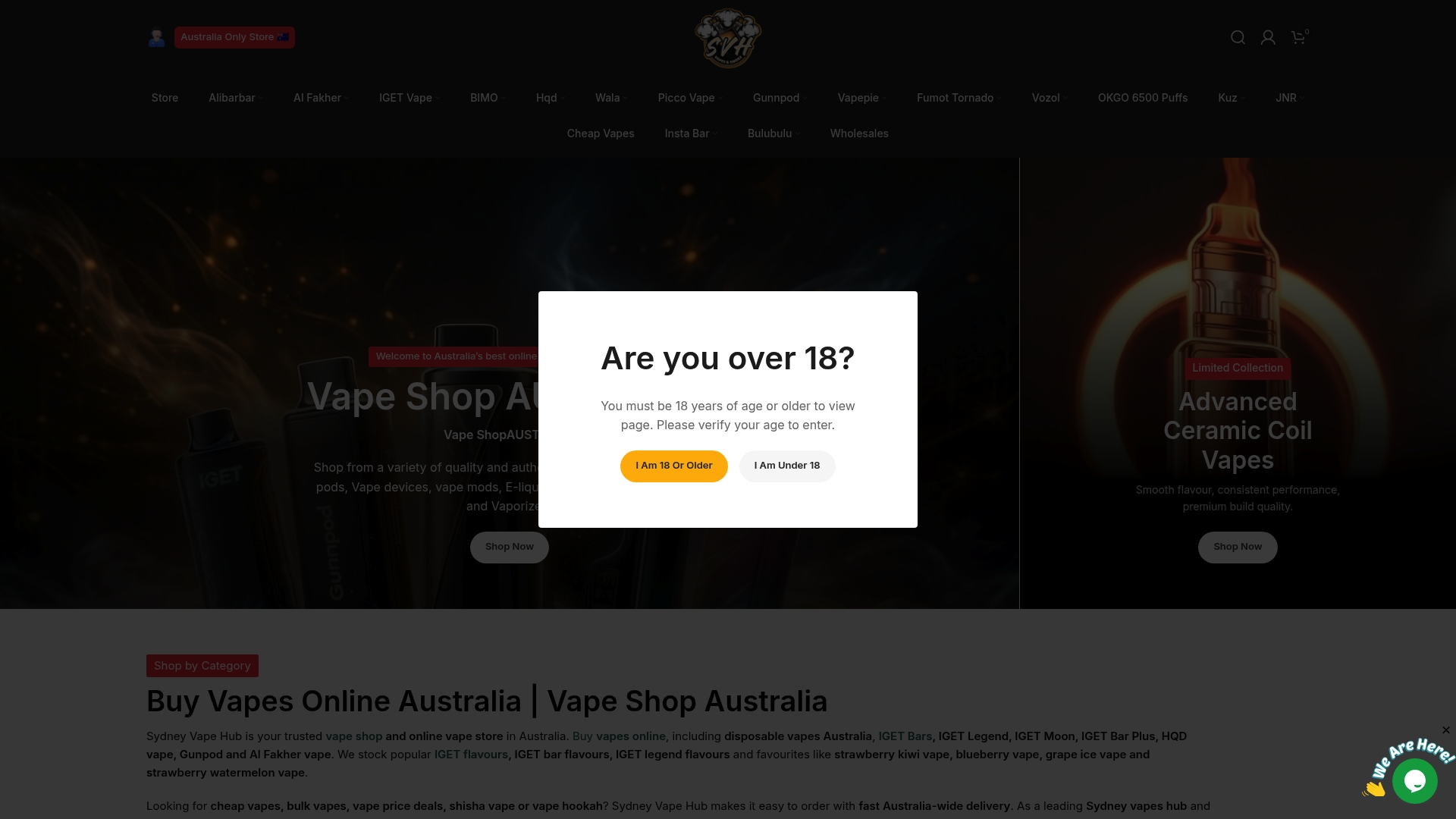
Staying legal in 2026 means knowing exactly where your vape comes from. Sydneyvapeau stocks products sourced from regulated suppliers, giving you confidence in what you are buying. Whether you are looking for a high-puff disposable like the Vapepie Crystal Pop 15000 in Cherry Cola or the Picco Break 30000 Puffs in Strawberry Banana, Sydneyvapeau makes it easy to find authentic products with fast Australia-wide delivery. Browse the full range at sydneyvapeau.com and order with confidence.
FAQ
What is the legal age to buy vapes in Australia in 2026?
The legal age is 18. Selling any vape, including nicotine-free products, to anyone under 18 is illegal across all sales channels, including online.
Where can you legally buy vapes in Australia in 2026?
Vapes can only be legally purchased from participating pharmacies. Tobacconists, vape shops, and convenience stores are no longer authorized to supply vaping products.
Do you need a prescription to buy vapes in Australia?
You do not need a prescription for vapes with up to 20 mg/mL nicotine if you consult a pharmacist at a participating pharmacy. A prescription is required for higher nicotine concentrations.
What are the penalties for selling illegal vapes in Western Australia?
Western Australia imposes fines up to $21 million and up to 15 years imprisonment for dealing in illicit vaping products, with authorities also able to close stores for up to 90 days.
Are nicotine-free vapes legal to buy outside a pharmacy?
No. All vapes, regardless of nicotine content, must be sold through participating pharmacies under Australia’s 2026 regulations. Nicotine-free vapes sold outside this channel are still illegal products.