
How Vape Hubs Operate in Sydney: 2026 Guide

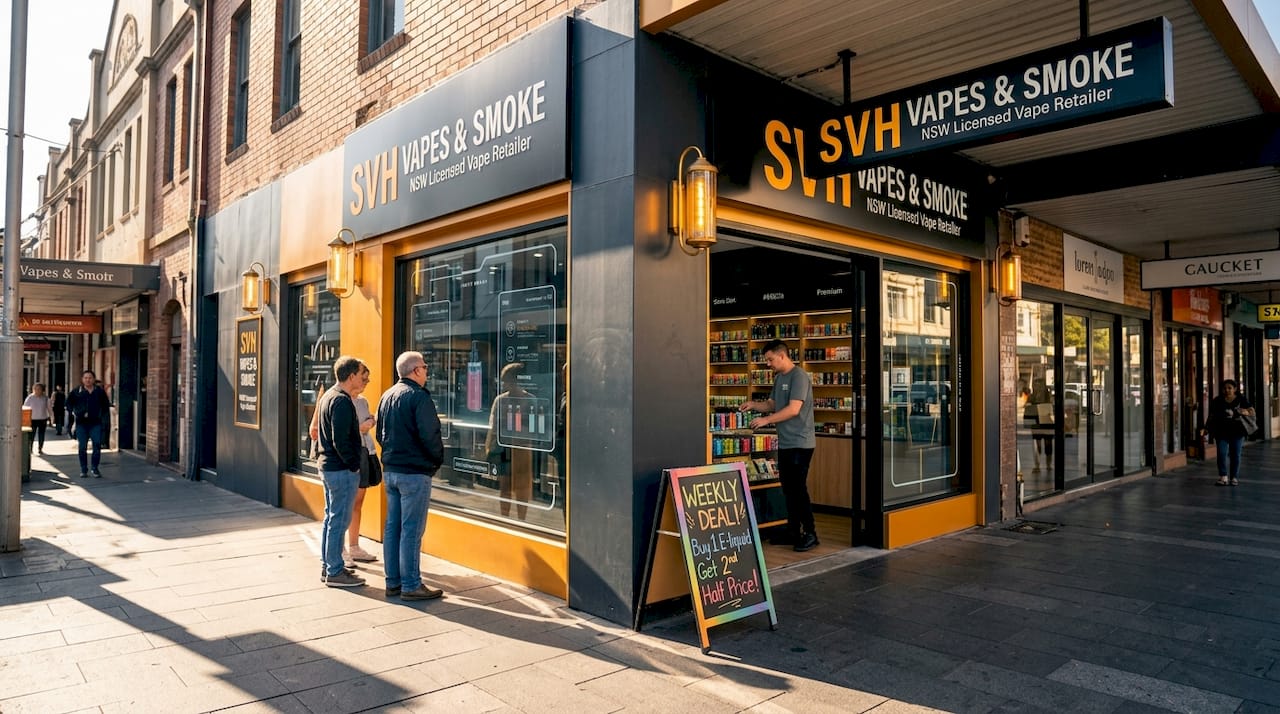
Sydney vape hubs operate through two distinct business models: licensed retail stores governed by NSW Health regulations and underground networks that function outside the law entirely. The Sydney vape market in 2026 sits at a crossroads where 60% of total vape sales come from illicit sources, with 97% of vaping occurring outside the prescription model. Understanding how vape hubs operate in Sydney means understanding both sides of that divide. Legitimate retailers like Sydneyvapeau source products from regulated suppliers and hold proper licenses, while illegal hubs run cash-heavy logistics and encrypted digital channels to stay ahead of enforcement. This guide breaks down both models so you know exactly what you’re dealing with.
How do regulated vape hubs operate legally in Sydney?
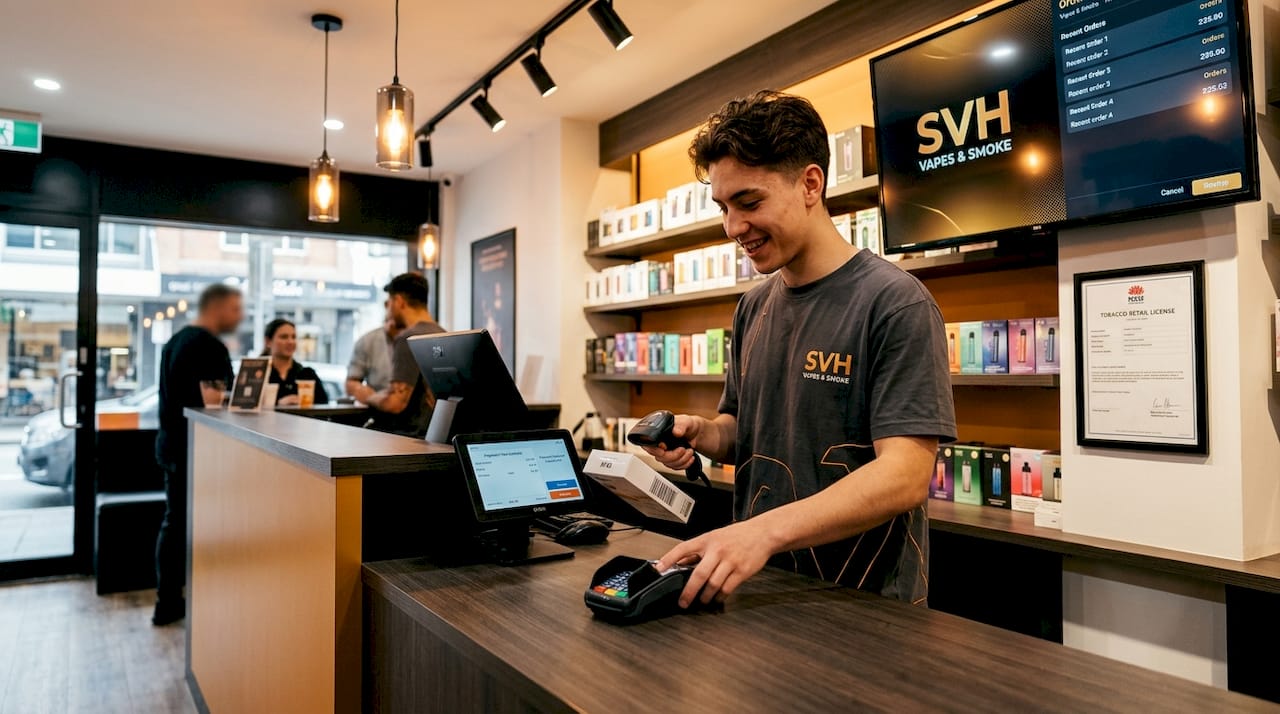
Legal vape shop operations in Sydney are defined by the NSW tobacco licensing scheme, which requires every retailer and wholesaler selling tobacco or vaping products to hold a license per premises. That means a business with three locations needs three separate licenses. There are no blanket approvals. This per-premises requirement is the single most important structural feature of legal vape hub operations in Sydney.
Pharmacies occupy a unique position in this framework. They can sell vaping products for therapeutic use without holding a tobacco license, because their sales fall under the Therapeutic Goods Administration framework rather than the NSW retail tobacco regime. Every other type of retailer, including convenience stores, tobacconists, and dedicated vape shops, must be licensed before a single product hits the shelf.
Here is what legal vape store operations in Sydney typically involve:
- Licensing: A current NSW tobacco retail license tied to the specific premises
- Product sourcing: Stock purchased from regulated, traceable suppliers with documented supply chains
- Age verification: Mandatory ID checks at point of sale, with no exceptions
- Premises compliance: Stores must meet display and signage requirements set by NSW Health
- Record keeping: Sales and inventory records available for inspection at any time
Penalties for operating outside these rules are severe. Premises can be closed for up to one year if illegal vape sales are detected. Landlords who knowingly permit illegal vape sales face up to one year of imprisonment and fines reaching $165,000. That financial exposure has started to change landlord behavior, which is a meaningful shift in how enforcement reaches underground operations.
Pro Tip: If you’re buying from a physical vape shop in Sydney, ask to see their NSW tobacco retail license number. A legitimate store will display it or provide it without hesitation.
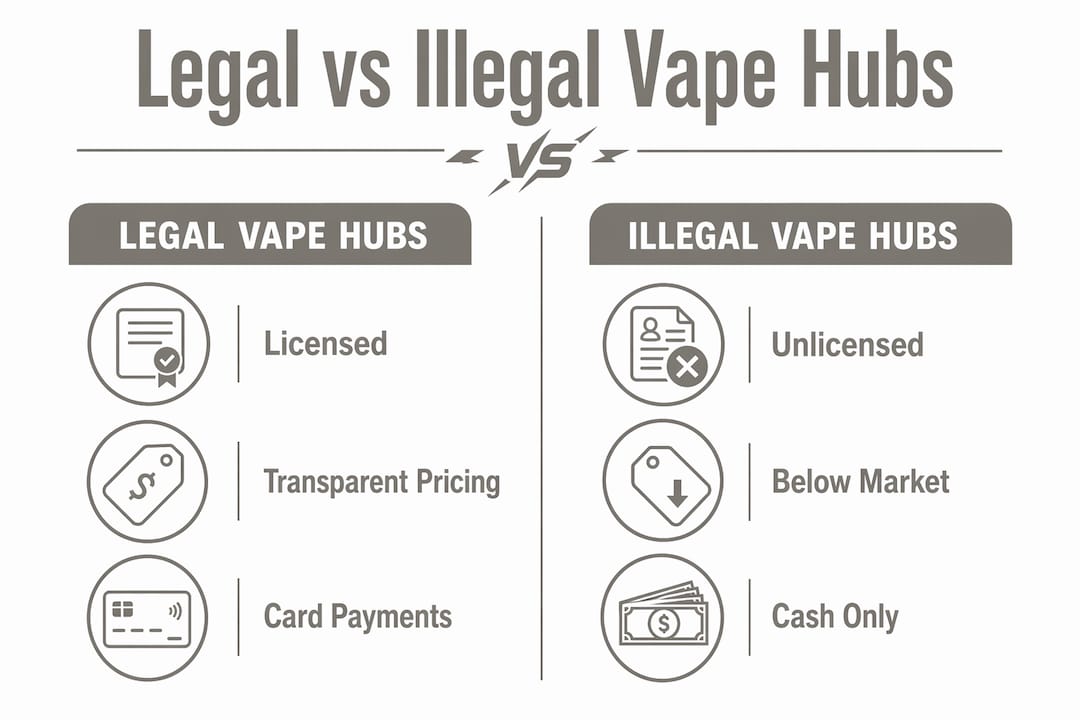
Legal vape hubs also tend to operate with transparent pricing, accept card payments, and offer product warranties. These are not just conveniences. They are signals of a compliant business model that can withstand regulatory scrutiny.
What business models do illegal vape hubs use in Sydney?
The illicit vape trade in Sydney is not a fringe operation. It is a structured $10 billion black market with logistics, supply chains, and customer acquisition strategies that mirror legitimate retail in sophistication while deliberately avoiding every legal checkpoint. That scale explains why enforcement alone has not been enough to shut it down.
Underground vape hubs in Sydney typically share these operational characteristics:
- Cash-only transactions: Avoiding traceable financial records and licensed payment processors
- High turnover, low footprint: Products move fast through multiple small locations rather than one large store
- Fragmented supply chains: Stock sourced from unverified overseas suppliers, often in bulk shipments
- Rapid relocation: Physical locations shift frequently to avoid repeat enforcement visits
- Referral-based access: New customers are vetted through existing buyers before gaining access
The most significant operational shift in 2026 is the move to encrypted digital platforms. Vape sellers increasingly rely on Telegram and WhatsApp invite-only groups that function as digital speakeasies. Joining requires a referral from an existing member and sometimes identity verification within the group itself. Traditional website blocking does nothing to stop these channels.
“The shift to online invite-only groups represents a profound change in illicit vape selling tactics, challenging traditional regulatory approaches.” — The Star, 2026
This fragmentation is deliberate. When authorities shut down one node in the network, the rest continues operating. Despite $1 billion spent on enforcement over five years, illegal hubs have adapted faster than regulators have been able to respond. The encrypted channel model is the clearest example of that adaptation. Licensed payment providers maintain anti-money laundering controls that make financial transactions traceable, which is exactly why illicit operators avoid them entirely and stick to cash.
How do legal and illegal vape hub models compare?
The operational gap between licensed and unlicensed vape hubs in Sydney is wide. The table below captures the core differences across the dimensions that matter most for consumers and regulators.
| Feature | Legal vape hub | Illegal vape hub |
|---|---|---|
| Licensing | NSW tobacco retail license per premises | None |
| Payment methods | Card and cash accepted | Cash only |
| Product sourcing | Regulated, traceable suppliers | Unverified overseas sources |
| Customer access | Walk-in retail or verified online store | Referral-only, encrypted platforms |
| Enforcement exposure | Subject to inspection, closure orders | Mobile, fragmented, harder to target |
| Landlord liability | Landlord protected under compliance | Landlord faces fines up to $165,000 |
| Product safety | Documented, tested products | Unknown ingredients, no testing |
The revenue profiles of these two models differ sharply. Legal vape hubs operate on thinner margins because they absorb licensing costs, compliant supply chain premiums, and staff training. Illegal hubs undercut on price because they carry none of those costs. That price gap is a primary driver of consumer behavior toward illicit sources.
Enforcement has had measurable impact on physical illegal storefronts. NSW Health issued 44 closure notices and 90-day closure orders on 17 Sydney CBD retailers in May 2026, including multiple EzyMart locations. EzyMart publicly committed to compliance and terminated contracts with non-compliant franchisees following the action. That response shows enforcement can move large retail networks when applied with enough force.
Pro Tip: When comparing prices between vape stores, a price that seems significantly below market rate is often a signal that the product is unlicensed, untested, or both. The cost difference is real, but so is the safety risk.
Online illegal operations are harder to disrupt. Encrypted group chats leave no public-facing URL to block and no storefront to close. Authorities focusing on shopfronts, landlord penalties, and large-volume shipments are making progress on physical locations, but the digital layer of the illicit market remains largely intact.
What does Sydney’s vape market mean for consumers and local businesses?
The coexistence of legal and illegal vape hubs in Sydney creates real, practical consequences for anyone buying or selling vaping products. Here is what the current market structure means in concrete terms.
- Consumers face a product safety gap. Illegal vapes contain unverified ingredients with no testing documentation. Buying from an unlicensed source means accepting unknown health risks alongside the legal risk of purchasing a prohibited product.
- Legitimate businesses compete on uneven ground. Licensed vape retailers absorb compliance costs that illegal operators skip entirely. That cost difference shows up in retail prices, putting legal stores at a structural disadvantage.
- Convenience stores face the highest scrutiny. The EzyMart closures in May 2026 demonstrated that stores with illegal vape sales face immediate closure orders and contract terminations. Convenience store operators now carry significant reputational and financial risk if any staff member sells non-compliant products.
- Enforcement is accelerating. NSW Health’s 2026 crackdown signals a shift toward sustained, high-visibility enforcement rather than isolated inspections. Retailers who have not audited their compliance posture are exposed.
- Consumer education is the missing piece. Enforcement alone is insufficient to curb illegal vape markets without parallel demand-side measures. Consumers who understand the risks of unlicensed products are less likely to seek them out, which reduces the market that illegal hubs depend on.
For consumers navigating this market, the safest path is straightforward: buy from stores that display a current NSW tobacco retail license, accept card payments, and can provide product documentation on request. Online stores like Sydneyvapeau that source from regulated suppliers and operate transparently offer the same convenience as underground channels without the legal and health exposure.
Key takeaways
Sydney vape hubs operate through two fundamentally different models: licensed retail with full regulatory compliance and illicit networks that use cash logistics and encrypted platforms to evade enforcement.
| Point | Details |
|---|---|
| Legal licensing is per premises | Every NSW vape retailer needs a separate license for each physical location it operates. |
| Illicit hubs use encrypted platforms | Telegram and WhatsApp invite-only groups have replaced storefronts as the primary illegal sales channel. |
| The illegal market is dominant | Over 60% of total vape sales in some areas come from unlicensed sources, showing enforcement limits. |
| Landlord liability is a new lever | Landlords face up to $165,000 in fines for knowingly permitting illegal vape sales on their premises. |
| Consumer education closes the gap | Enforcement without demand-side education leaves the core driver of illegal vape markets untouched. |
The enforcement gap no one talks about enough
I’ve watched the Sydney vape market shift significantly over the past few years, and the 2026 EzyMart closures are the clearest sign yet that regulators are getting serious. But here’s what the enforcement headlines miss: shutting storefronts is the easy part. The harder problem is that the market has already moved online, and encrypted group chats are genuinely difficult to police at scale.
What strikes me most is the landlord liability angle. Holding property owners financially responsible for what happens in their buildings is a smarter enforcement mechanism than chasing individual sellers. It changes the incentive structure at the property level, which is where physical illegal operations actually live. That’s the kind of systemic pressure that can shift market behavior over time.
The prescription model for vaping has also created an unintended consequence. When 97% of vapers operate outside that model, the prescription framework isn’t regulating the market. It’s just pushing it underground. A more realistic regulatory approach would acknowledge actual consumer behavior and build compliance pathways that people will actually use. Until that happens, enforcement will keep playing catch-up with a market that adapts faster than the rules do.
For consumers, my honest advice is simple: the price difference between a licensed product and an illegal one is not worth the health and legal risk. Buy from stores that can show you their paperwork.
— Nembu
Shop compliant vapes from Sydneyvapeau
Sydneyvapeau stocks a full range of compliant disposable vapes sourced from regulated suppliers, with fast delivery across Australia. You get product transparency, verified sourcing, and none of the risk that comes with unlicensed channels. Popular options include the Vapepie Crystal Pop 15000 Puffs in Double Apple, a high-puff disposable with documented ingredients and consistent quality. For something with serious capacity, the Picco Break 30000 Puffs in Strawberry Kiwi delivers long-lasting performance from a store you can trust. Every product at Sydneyvapeau comes with the confidence of a legitimate, NSW-aware retailer. Shop now and skip the guesswork.
FAQ
What license do vape shops in Sydney need?
Every NSW vape retailer must hold a tobacco retail license tied to each specific premises where products are sold. Pharmacies selling vaping products for therapeutic use are exempt from this requirement.
Why is the illegal vape market so hard to shut down?
The illicit vape market uses encrypted platforms like Telegram and WhatsApp to operate as invite-only networks, making traditional website blocking and storefront enforcement largely ineffective against the digital layer of the trade.
What happened to EzyMart stores in Sydney in 2026?
NSW Health issued closure notices and 90-day closure orders on 17 Sydney CBD retailers in May 2026, including multiple EzyMart locations, for selling illegal vapes and tobacco products. EzyMart subsequently terminated contracts with non-compliant franchisees.
How can I tell if a Sydney vape store is operating legally?
A legal vape store will display a current NSW tobacco retail license, accept card payments, and be able to provide product sourcing documentation. Stores that operate cash-only with no visible licensing are a clear warning sign.
Does enforcement actually reduce illegal vape sales in Sydney?
Enforcement reduces illegal sales at physical locations, but the overall market share of illicit products remains above 60%. Experts note that enforcement without consumer education and demand-side measures leaves the underlying market largely intact.