

Travel with Disposable Vapes: 2026 Rules and Tips


Traveling with disposable vapes is allowed on commercial flights, but only under strict conditions set by the FAA, TSA, and IATA. Every disposable vape must go in your carry-on bag, never in checked luggage. Vaping on any commercial aircraft is prohibited worldwide, and destination countries may ban possession entirely. Whether you’re flying domestically or heading overseas, knowing these rules before you reach the airport saves you from fines, confiscation, and serious travel disruptions.
What are the airline and TSA rules for disposable vapes?
Disposable vapes fall under the category of electronic nicotine delivery systems (ENDS), and every major aviation authority treats them the same way. The core rule is simple: carry-on only, never checked. The FAA identified lithium-ion battery devices as a leading cause of aircraft fire incidents in 2022, with fines reaching up to $4,000 for violations. That risk is why checked bag placement is a hard prohibition, not a suggestion.
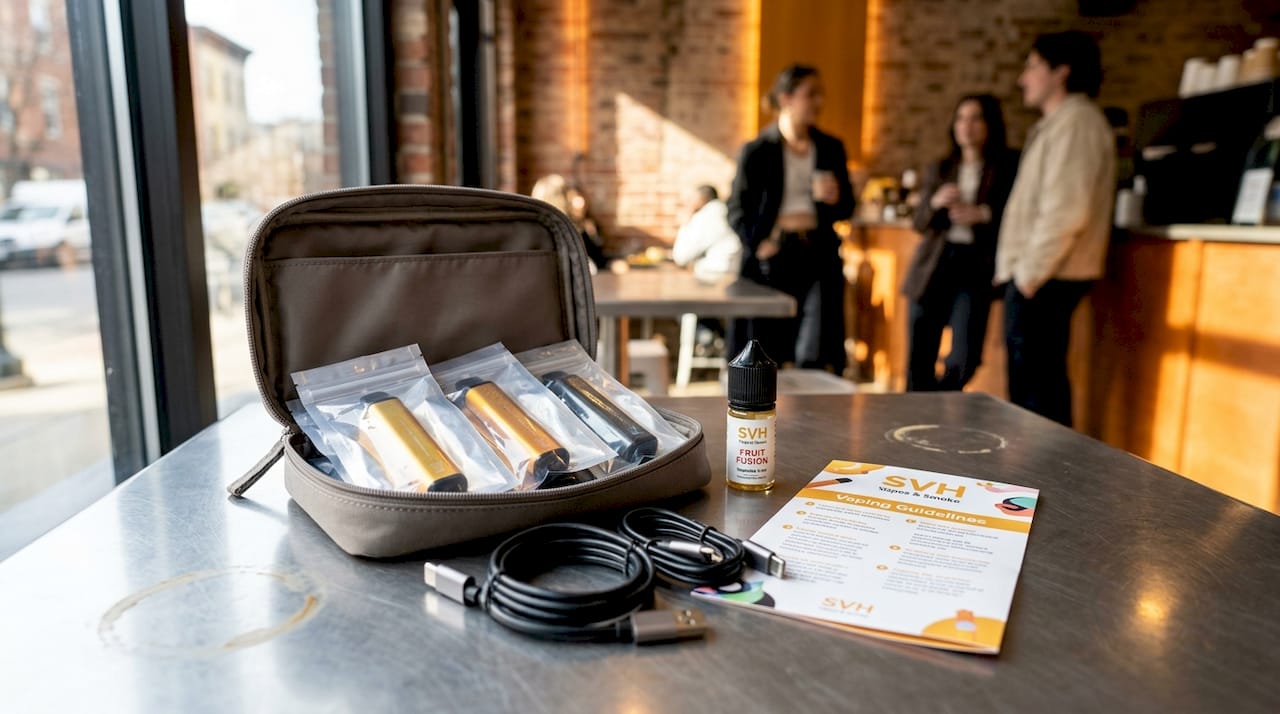
TSA security screening applies the same process to disposable vapes as it does to laptops and other electronics. You place your device in the bin, it goes through the X-ray, and agents may ask you to power it off or demonstrate it is not activated. The TSA requires all ENDS devices to be carried onboard, and charging any vape device during a flight is also prohibited.
E-liquid inside disposable vapes is sealed and not subject to the 3-1-1 rule on its own. However, if you carry separate refill bottles or additional e-liquid, those containers must follow TSA’s 3.4 oz liquid limit, placed in a single quart-sized clear bag. TSA treats e-liquids exactly like shampoo or lotion at the checkpoint.
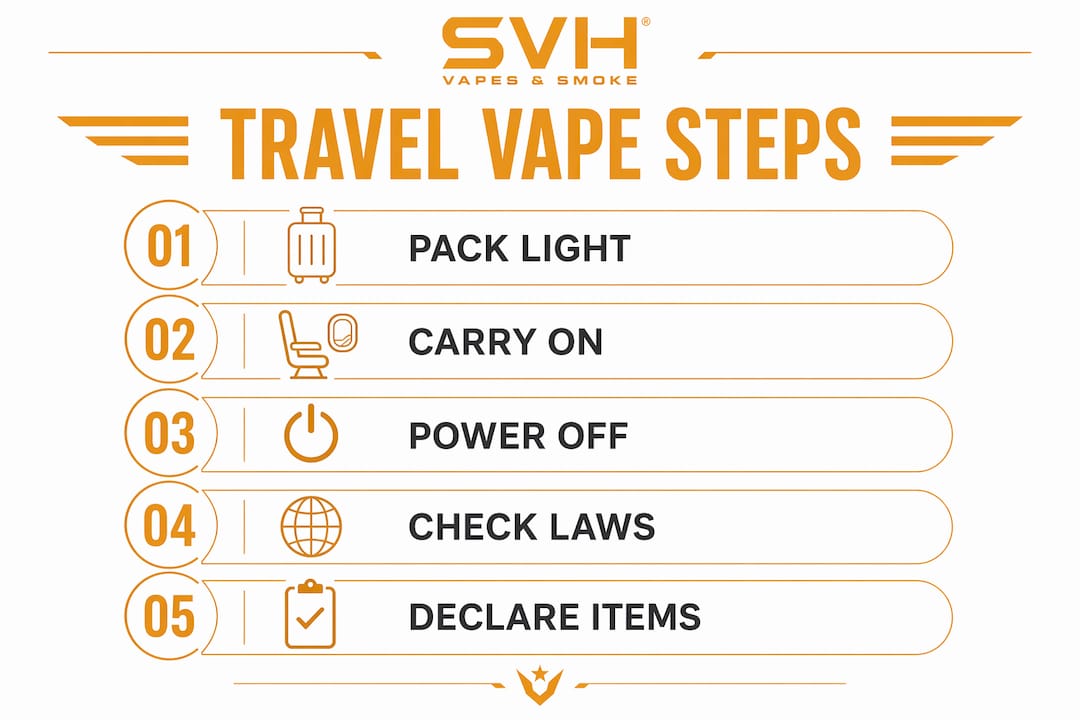
Here is a quick checklist of the non-negotiable airline rules:
- Store all disposable vapes in your carry-on bag or on your person
- Power off devices completely before boarding
- Prevent accidental activation by covering the mouthpiece or using a case
- Never charge a vape device while onboard
- Keep any separate e-liquid bottles under 3.4 oz in a quart-sized bag
Pro Tip: Place your disposable vapes at the top of your carry-on so you can pull them out quickly at security without unpacking your entire bag.
Vaping on commercial flights is treated identically to smoking. Airlines and the FAA enforce this globally, and violations can result in fines or legal action at your destination airport.
How do destination laws affect vaping on vacation?
The rules on the plane are consistent. The rules at your destination are not. Several countries ban vape possession entirely, including Singapore, Thailand, India, and Saudi Arabia. In Singapore, importing or possessing a vape device carries fines and potential jail time. Thailand enforces similar penalties. Customs officers in these countries actively search for vaping products, and “I didn’t know” is not a legal defense.
Public health groups increasingly classify vapes alongside tobacco products, which means smoke-free zones now extend to vaping in airports, transit hubs, and public spaces across many countries. Enforcement is rising, not declining. Even in countries where vaping is technically legal, you may face restrictions in specific venues, hotels, or outdoor areas.
Before any international trip, check these sources:
- The official government travel advisory for your destination country
- Your airline’s country-specific entry requirements page
- Recent posts on travel forums like TripAdvisor or Reddit’s r/travel for real-world enforcement reports
- The destination country’s customs authority website for current import rules
Carrying vapes into a country that bans them risks confiscation at customs, a fine, and in extreme cases, detention. If you are traveling to Southeast Asia, the Middle East, or South Asia, research the laws for every country on your itinerary, including layover destinations where you may clear customs briefly.
What are the best packing practices for disposable vapes?
Smart packing prevents two problems: security delays and device damage. Air pressure changes during flight can cause e-liquid to expand and leak, so sealing disposables in leak-proof bags protects your clothes and other belongings. A standard zip-lock bag works fine. A dedicated vape travel case works even better.
Follow these steps for packing disposable vapes correctly:
- Place each disposable vape in a small, sealed zip-lock bag
- Group all vape items together in one section of your carry-on
- Power off every device before packing
- Cover the mouthpiece with the original cap or a piece of tape
- Keep the bag accessible for security screening
Quantity matters too. Carrying 5 to 10 units is generally accepted as personal use. Travelers carrying 20 or more devices risk being questioned by customs officers who may classify the quantity as commercial resale. Stick to what you realistically need for the trip.
| Packing Item | Recommended Practice |
|---|---|
| Disposable vapes | Sealed zip-lock bag, powered off |
| Separate e-liquids | Under 3.4 oz, in quart-sized clear bag |
| Quantity | 5 to 10 units maximum for personal use |
| Device protection | Original cap or tape over mouthpiece |
| Placement in bag | Top of carry-on for easy security access |
Pro Tip: If you are traveling for more than a week, choose a high-puff-count disposable like the Picco Break 30000 Puffs so you carry fewer units and reduce the chance of scrutiny at customs.
What common mistakes should travelers avoid when flying with vapes?
The most frequent and costly mistake is packing a disposable vape in checked luggage. Many travelers do this without thinking, treating a vape like a toiletry. The FAA’s prohibition on lithium battery devices in checked bags is absolute, and airport staff do find them during baggage screening. The device gets confiscated, and you may face a fine before you even board.
The second most common mistake is vaping in an airport bathroom or airplane lavatory. Vaping on commercial flights is prohibited worldwide, and smoke detectors in lavatories respond to vapor. This triggers an incident report, potential diversion of the aircraft, and legal consequences at landing. No vape session is worth that outcome.
Other mistakes that cause real problems:
- Ignoring destination country bans and assuming your home country’s rules apply abroad
- Carrying more than 10 units without documentation of personal use intent
- Failing to check layover country laws, not just the final destination
- Leaving devices in a pocket that goes through checked baggage by mistake
- Assuming hotel rooms or rental properties allow vaping without checking their policies
Travelers who skip destination research are the ones who end up surrendering devices at customs. A 10-minute check of official government travel advisories before you pack eliminates most of these risks.
How do disposable vapes compare to other devices for travel?
Disposable vapes are the most travel-friendly vaping format available. They require no separate batteries, no tanks, no coils, and no bottles of e-liquid to manage. High-puff-count disposables like the GIMI 30K or the Vapepie Max 20000 give you days of use from a single sealed unit. That simplicity translates directly into fewer items to declare, fewer liquids to bag, and faster security screening.
Refillable pod systems and box mods require you to carry spare batteries, which adds complexity. Spare lithium batteries must be in carry-on luggage and must be individually protected against short circuits. Tanks can leak during pressure changes. E-liquid bottles must comply with the 3-1-1 rule. Every additional component is another potential issue at the checkpoint.
| Feature | Disposable vapes | Refillable devices |
|---|---|---|
| Separate batteries needed | No | Yes |
| E-liquid bottles required | No | Yes |
| Leak risk during flight | Low | Moderate to high |
| Security complexity | Low | Higher |
| Puff count per unit | Up to 30,000 | Unlimited with refills |
The one area where refillables win is long-term cost and environmental impact. For a short trip of one to two weeks, a disposable like the Vapepie Max 20000 covers most travelers without needing a second unit. For extended travel, carry two or three sealed disposables rather than a refillable system.
Pro Tip: Choose a disposable with a USB-C port for recharging the battery mid-use, but remember: you can only recharge it at your hotel or in the airport lounge, never onboard the aircraft.
Key takeaways
Traveling with disposable vapes is straightforward when you follow carry-on rules, respect liquid limits, and research destination laws before departure.
| Point | Details |
|---|---|
| Carry-on only rule | All disposable vapes must be in carry-on luggage due to lithium battery fire risk. |
| Destination laws vary | Countries like Singapore, Thailand, and India ban vapes entirely with serious penalties. |
| Packing quantity limit | Keep to 5 to 10 units to avoid customs scrutiny and resale suspicion. |
| Disposables beat refillables | No spare batteries or liquid bottles make disposables the simplest travel format. |
| No vaping on flights | Vaping on any commercial aircraft is prohibited worldwide with potential fines. |
What I’ve learned from years of traveling with vapes
The biggest mistake I see travelers make is treating vaping regulations like a minor detail to figure out at the airport. They are not. I have watched people surrender brand-new devices at customs in Bangkok and seen others get pulled aside at Changi Airport in Singapore for carrying a single disposable. The rules are enforced, and the consequences are real.
My personal approach: I check the official government travel advisory for every country on my itinerary at least a week before I fly. I also scan recent threads on travel forums to see what enforcement actually looks like on the ground, because official rules and practical enforcement sometimes differ. That combination gives me a clear picture before I pack anything.
For the devices themselves, I always choose high-puff-count disposables for trips. Fewer units mean less to manage and less to explain. I seal each one in its own small zip-lock bag, power them off, and place them together at the top of my carry-on. Security lines move faster when you are organized.
One thing I tell every traveler: build in flexibility. If your destination bans vapes, leave your devices at home and plan accordingly. Trying to sneak a disposable through customs in a country with a hard ban is not a calculated risk. It is just a bad decision with predictable consequences. Respect the rules, plan ahead, and the trip goes smoothly.
— Nembu
Stock up on travel-ready disposables at Sydneyvapeau
Sydneyvapeau stocks a strong range of high-puff-count disposable vapes that are built for exactly this kind of travel. The Vapepie Crystal Pop 15000 Double Apple and the Crystal Pop Mango Magic give you long-lasting performance in a compact, sealed format that travels cleanly through security. No tanks, no loose batteries, no mess. If you need guidance on which device suits your trip length or destination, the Sydneyvapeau team is ready to help. Browse the full range at sydneyvapeau.com and order with fast Australia-wide delivery before your next departure.
FAQ
Can you bring vapes on a plane in your carry-on?
Yes. All disposable vapes and e-cigarettes must be carried in your carry-on bag or on your person. Checked luggage placement is prohibited due to lithium battery fire risk, with FAA fines reaching up to $4,000.
What countries ban disposable vapes for travelers?
Singapore, Thailand, India, and Saudi Arabia ban vape possession and use, with penalties including fines and jail time. Always check the official customs rules for every country on your itinerary before you travel.
How many disposable vapes can you bring on a flight?
There is no fixed legal maximum for personal use, but carrying 5 to 10 units is the accepted range. Quantities above that may raise suspicion of commercial resale at customs checkpoints.
Can you vape in airport terminals or lounges?
Most airports prohibit vaping in terminals under the same smoke-free policies that apply to cigarettes. Some international airports have designated smoking rooms that permit vaping. Check the specific airport’s policy before assuming any indoor area is permitted.
Do e-liquids in disposable vapes count toward the TSA liquid limit?
The sealed e-liquid inside a disposable vape does not need to be removed or declared separately. Separate e-liquid bottles do count toward the TSA 3-1-1 rule and must be under 3.4 oz in a quart-sized clear bag.